
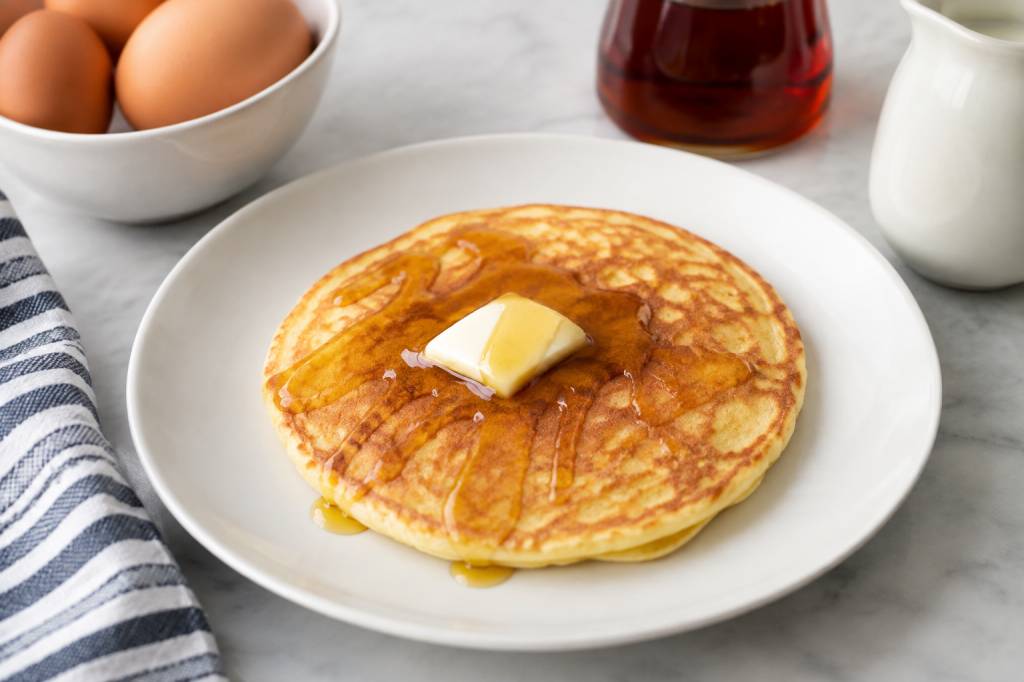
Some mornings call for a proper breakfast, but few people want to wash a sink full of dishes before leaving the house. This one-egg pancake recipe is designed for exactly those mornings. It uses simple ingredients, takes only a few minutes, and makes a light, satisfying breakfast for one.
You do not need a special pancake mix, a blender, or a long list of ingredients. One egg, a little flour, some milk and a hot frying pan are enough. Add a touch of sugar for a sweet version, or leave it out and use the pancake as a base for savoury toppings.
The result is a small stack of soft, golden pancakes with crisp edges. It is the sort of breakfast that feels more generous than the effort involved.
Why this one-egg pancake works
Many pancake recipes make enough for a family, which is useful on a Sunday morning but less practical when you are cooking for one. Leftover pancakes can be reheated, of course, but they are rarely quite as good as fresh ones. This recipe keeps things simple and makes one modest serving.
The egg provides structure and richness, while the milk loosens the batter. Flour gives the pancakes their body, and baking powder adds enough lift to keep them tender rather than flat and heavy. A small amount of melted butter or oil improves the texture and helps prevent sticking.
The batter is forgiving. If it seems too thick, add a small splash of milk. If it looks too loose, add a teaspoon of flour. Pancake making does not require laboratory precision. It requires a warm pan and a little attention.
Ingredients for one serving
- 1 large egg
- 60 g plain flour, approximately ½ cup
- 80 ml milk, approximately ⅓ cup
- ½ teaspoon baking powder
- 1 teaspoon sugar, optional
- A small pinch of salt
- 1 teaspoon melted butter or neutral oil, plus a little more for the pan
This quantity makes approximately three small pancakes or two medium-sized ones, depending on how much batter you use for each. For a more filling breakfast, serve them with fruit, yoghurt or a little nut butter.
Plain flour works well, but you can use wholemeal flour for a slightly nuttier flavour. The pancakes will be a little denser, so replace only half of the plain flour at first. Using all wholemeal flour can produce a heavier result unless you add a small extra splash of milk.
Equipment you need
- One mixing bowl
- A fork or small whisk
- A non-stick frying pan or well-seasoned skillet
- A spoon or small ladle
- A spatula
A measuring jug is useful but not essential. The fewer items involved, the quicker the washing-up. If you are making breakfast before the first cup of coffee, that matters.
How to make the pancake batter
Crack the egg into a bowl and beat it lightly with a fork. Add the milk, melted butter or oil, and sugar if you are making sweet pancakes. Stir until the mixture is combined.
Add the flour, baking powder and salt. Mix gently until no large pockets of dry flour remain. Do not keep beating the batter once it comes together. A few small lumps are perfectly acceptable. Overmixing develops the gluten in the flour and can make the pancakes chewy rather than soft.
Let the batter stand for two or three minutes while you heat the pan. This short rest gives the flour time to absorb the liquid and helps the mixture thicken slightly. If the batter becomes noticeably too thick, stir in a teaspoon or two of milk.
The finished batter should fall slowly from a spoon. It should not be as thin as milk, and it should not sit in the bowl like bread dough. Think of a thick pouring cream: fluid, but with enough body to hold its shape briefly in the pan.
Cooking the pancakes
Place a non-stick frying pan over medium heat. Add a small amount of butter or oil. The pan should be hot enough for the batter to begin cooking immediately, but not so hot that the outside browns before the centre has set.
Spoon half of the batter into the pan for a medium pancake, or use smaller amounts to make a little stack. If you are using a standard frying pan, you may be able to cook two small pancakes at the same time. Leave space between them so you can turn them easily.
Cook for about two minutes, or until bubbles appear on the surface and the edges look set. The underside should be golden brown. Slide a spatula underneath and turn the pancake in one confident movement.
Cook the second side for another 60 to 90 seconds. It should feel springy when pressed gently in the centre. Transfer the pancake to a plate and repeat with the remaining batter, adding a little more butter or oil if the pan looks dry.
Keep the heat at medium or medium-low. High heat is tempting when you are in a hurry, but it is usually the reason pancakes become dark outside and raw in the middle. A few extra seconds at a moderate temperature produce a much better result.
Sweet topping ideas
The simplest serving is a little butter and honey or maple syrup. The warmth of the pancake melts the butter, while the syrup runs into the edges. It is uncomplicated and difficult to improve upon.
- Sliced banana with a spoonful of peanut butter
- Greek yoghurt with berries
- Stewed apple with cinnamon
- Honey with chopped walnuts
- Fresh strawberries with a little icing sugar
- Chocolate spread with sliced pear
- Orange zest and a small drizzle of maple syrup
For a more balanced breakfast, combine something sweet with a source of protein or fat. Greek yoghurt, nuts, seeds or nut butter will keep you satisfied for longer than syrup alone. There is nothing wrong with syrup, but it should not have to carry the entire breakfast.
Simple savoury variations
Leave out the sugar and add a little black pepper for a savoury pancake. You can also stir in a pinch of dried herbs, smoked paprika or grated cheese. The basic batter is neutral enough to work with both sweet and savoury ingredients.
- Grated cheddar and spring onion
- Wilted spinach with a little feta
- Smoked salmon with cream cheese
- Tomato, basil and black pepper
- Avocado with chilli flakes and lime
- Leftover roasted vegetables with grated cheese
For a quick lunch-style plate, make the pancake slightly larger and serve it with a fried egg or a few slices of avocado. It is a useful way to turn a small amount of batter into something more substantial without creating another complicated recipe.
Practical tips for better pancakes
Use a properly heated pan. A cold pan allows the batter to spread too much and encourages sticking. A pan that is too hot will brown the outside quickly. Test it by dropping in a tiny spot of batter. It should sizzle gently rather than burn immediately.
Do not flatten the pancake. Pressing it with the spatula may seem helpful, but it pushes out the air and makes the pancake thinner and tougher. Turn it once and leave it alone.
Keep the pancakes small. A smaller pancake is easier to flip, especially when the batter is soft. It also cooks more evenly. There is no prize for producing a pancake the size of a dinner plate.
Measure the flour reasonably carefully. Too much flour creates a stiff batter. If measuring by cups, spoon the flour into the cup rather than packing it down. Better still, use kitchen scales if they are available.
Do not overmix. Stir only until the dry ingredients disappear. A slightly lumpy batter is usually better than a perfectly smooth but overworked one.
Adjust the heat between batches. Pans often become hotter as they sit on the hob. If the second pancake colours too quickly, reduce the heat slightly before adding the rest of the batter.
Useful substitutions
You can adapt this recipe to suit what is already in the kitchen. Dairy milk can be replaced with oat, soy or almond milk. Choose an unsweetened version if you want control over the flavour. The result may be slightly different, but the recipe remains straightforward.
If you have no baking powder, use ¼ teaspoon of bicarbonate of soda with a teaspoon of yoghurt or lemon juice. The acid is needed to activate the bicarbonate. Without it, the pancakes may taste slightly soapy and will not rise as well.
For a gluten-free version, use a plain gluten-free flour blend designed for baking. The batter may need an extra teaspoon of milk because gluten-free flours often absorb liquid differently.
Mashed banana can replace the sugar and add moisture. Use about two tablespoons of ripe banana in the batter, but expect the pancake to brown more quickly. Keep the heat moderate and watch the edges.
How to serve a balanced breakfast
One pancake on its own is a light breakfast. That may be exactly what you want, particularly if you are not very hungry in the morning. If you need something more sustaining, build the plate around it rather than simply adding a larger amount of syrup.
- Add a handful of berries or a sliced apple.
- Serve with plain yoghurt for extra protein.
- Add nuts or seeds for texture and healthy fats.
- Pair a sweet pancake with a boiled or fried egg.
- Use peanut, almond or seed butter instead of a large amount of syrup.
This approach keeps the meal quick without making it feel sparse. A warm pancake, some fruit and a spoonful of yoghurt can be ready in less time than it takes to decide what to order.
Storing and reheating
This recipe is intended for one serving, but the pancakes can be stored if you make them ahead. Allow them to cool completely, then place them in an airtight container. Keep them in the refrigerator for up to two days.
Reheat them in a dry frying pan over low heat, in a toaster if they are firm enough, or in the microwave for around 20 seconds. The frying pan gives the best texture because it restores a little crispness to the edges.
You can also freeze cooked pancakes. Place a piece of baking paper between each one, then store them in a freezer bag. Reheat from frozen in a toaster or pan. Make sure they are hot all the way through before serving.
The small breakfast worth remembering
A useful recipe does not need to be elaborate. This one-egg pancake works because it fits an ordinary morning: limited time, basic ingredients and very little washing-up. It can be sweet when you need comfort, savoury when you need something practical, and adaptable when the contents of the fridge are looking rather uninspiring.
Once you have made it a few times, you will not need to measure every ingredient precisely. You will recognise the right batter consistency, learn how quickly your pan heats and find the toppings that suit you best. That is when a recipe becomes genuinely useful—not impressive on paper, but reliable when breakfast needs to happen quickly.