

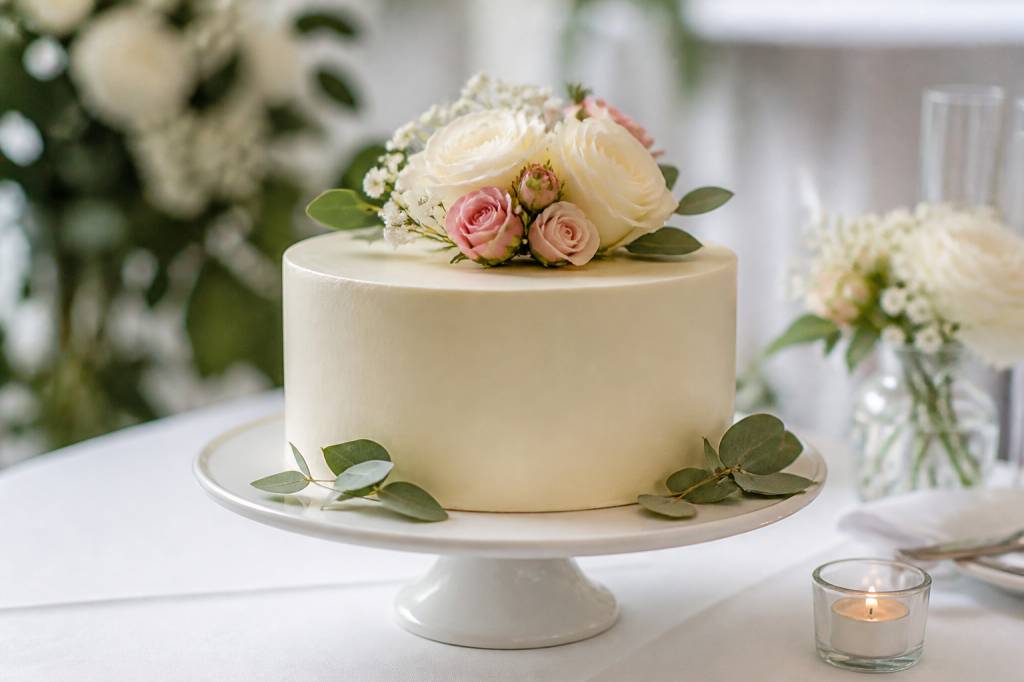
A one-layer wedding cake can be every bit as elegant as a tall, multi-tiered centrepiece. In fact, a single cake often feels more personal, more modern and far easier to manage. It suits a small wedding, an intimate dinner, a relaxed garden celebration or a couple who would rather spend money on good food than on several layers of sponge.
The key is proportion. With only one tier, the cake needs a clear visual idea. That might be fresh flowers, smooth buttercream, a beautiful colour, a simple texture or a carefully chosen topper. The design does not need to be complicated. It simply needs to look deliberate.
Here are practical one-layer wedding cake ideas that work for elegant celebrations, along with useful guidance on flavours, decoration, size and presentation.
Why choose a one-layer wedding cake?
A single-tier cake has several advantages beyond its neat appearance. It is usually less expensive, easier to transport and simpler to cut. There is also less risk of the cake leaning, sliding or requiring an emergency engineering session in the venue kitchen.
One-layer designs are particularly useful when:
You are planning a small wedding or elopement.
The cake is being served alongside other desserts.
You want to display a selection of miniature cakes or pastries as well.
You prefer understated decoration rather than a grand traditional cake.
You are baking the cake yourself or asking a family member to make it.
A single tier can also be made to look generous. A wide cake, perhaps 10 or 12 inches across, creates a confident presence without becoming visually heavy. If you need more portions, a plain sheet cake can be kept in the kitchen and served discreetly. Guests get the same flavour, while the display cake remains beautifully proportioned.
Start with the right cake shape and size
Round cakes are the classic choice, but they are not the only option. A square cake feels crisp and contemporary, while a heart-shaped cake brings a romantic touch without requiring much decoration. An oval cake can look refined and slightly unusual, especially on a long dessert table.
For a small celebration, a 6-inch cake may provide around 8 to 12 portions, depending on how it is cut. An 8-inch cake generally serves approximately 15 to 24 people. A 10-inch cake can provide around 30 portions or more when cut into slim wedding slices.
Portion numbers vary according to cake height and serving style, so ask your baker for a cutting guide. Wedding portions are usually narrower than ordinary dessert portions. This is sensible: guests may already have enjoyed a meal, canapés and perhaps a late-night snack that seemed like an excellent idea at the time.
If you want the cake to appear taller without adding another tier, use a deeper tin or stack two sponge layers with a generous filling. A tall, narrow single cake often looks more formal than a short, wide one.
Design idea: smooth white buttercream
A smooth white buttercream cake is simple, adaptable and difficult to regret. It provides a clean background for almost any wedding style, from a town hall ceremony to a formal country house reception.
Ask for sharp edges if you want a modern finish. For something softer, choose lightly textured buttercream with gentle horizontal marks or an uneven, hand-finished surface. The difference is small, but it changes the mood of the cake.
Keep the decoration restrained. A few options include:
A narrow satin ribbon tied around the base.
A small cluster of flowers placed to one side.
Edible pearls arranged around the top edge.
A discreet gold or silver leaf accent.
A simple acrylic or wooden cake topper.
White-on-white decoration is especially effective for an elegant celebration. It creates interest through texture rather than colour, which keeps the cake calm and sophisticated.
Design idea: delicate floral decoration
Flowers are one of the easiest ways to make a one-layer cake feel connected to the wedding. A single tier does not need a large floral arrangement. In many cases, one or two blooms are more effective than a cascade covering the entire cake.
Fresh flowers can be placed on top, arranged around the base or positioned at an angle along the side. Choose flowers that appear elsewhere in the venue so the cake feels part of the wider design rather than an isolated object.
Before using fresh flowers, check that they are food-safe and have not been treated with chemicals unsuitable for contact with food. Ideally, the stems should be wrapped or inserted into a suitable flower pick. Never push an untreated stem directly into the cake.
Edible flowers offer another option. Violas, pansies, rose petals and some varieties of lavender can provide colour without the practical concerns associated with cut flowers. Use them sparingly. A wedding cake should look inviting, not as though it has been left unattended in a botanical garden.
Design idea: pressed flowers and botanical details
For a natural or countryside wedding, pressed edible flowers and botanical details add charm without making the cake overly sweet in appearance. A plain buttercream cake decorated with small flowers, leaves and herbs can look fresh and relaxed.
Rosemary, thyme and small edible leaves work well with lemon, honey or olive oil cakes. Dried citrus slices can complement a summer design, while tiny pressed petals suit a spring celebration.
Botanical decoration is best kept light. Leave plenty of exposed cake so the overall design does not become crowded. A few details placed thoughtfully around the top edge can be enough.
Design idea: textured buttercream
Texture gives a simple cake depth and character. It is also practical because it does not depend on perfectly smooth icing. A textured finish can hide minor imperfections, making it a useful choice for home bakers.
Popular techniques include:
Vertical ridges made with a cake comb.
Soft waves created with a palette knife.
Scalloped buttercream around the sides.
Small piped dots or rosettes.
A rustic, lightly scraped finish showing the sponge beneath.
Textured white buttercream looks elegant with a simple topper. Coloured buttercream can be equally effective. Pale sage, dusty blue, soft peach and warm ivory all work well for weddings without overpowering the table.
Design idea: minimalist black and white
Black and white is a reliable combination for a modern celebration. A white cake with black lettering, a black ribbon or small black painted details feels graphic and confident.
One approach is to keep the cake completely white and add a thin black line around the top or base. Another is to use black-and-white edible stripes on the side, balanced by a plain top and a small floral arrangement.
Use black decoration carefully. A little creates contrast; too much can make the cake feel more like a sophisticated birthday cake than a wedding cake. If the design is strong, choose a simple stand and neutral table linen so the cake remains the focus.
Design idea: elegant metallic accents
Gold, silver and copper accents can make a small cake feel celebratory without requiring elaborate piping. Metallic leaf can be applied in small patches, along the edge or in a deliberately uneven brushstroke.
Gold works particularly well with ivory buttercream, vanilla sponge and warm floral colours. Silver suits cool whites, pale blue and winter weddings. Copper adds warmth to terracotta, blush and autumn tones.
Edible metallic paint can also be used for a handwritten message, a fine border or small dots. The important word is edible. Craft glitter and ordinary metallic paint have no place on a cake, however attractive they may look in the stationery cupboard.
Design idea: a cake with a meaningful topper
When the cake itself is simple, the topper can carry the personality. Choose something that reflects the couple rather than using a generic decoration by default.
Possible toppers include:
A small monogram in wood, acrylic or metal.
The couple’s surname or wedding date.
A simple “Just Married” message.
Two paper figures, birds or botanical shapes.
A topper made from a meaningful quotation.
Keep the topper in proportion to the cake. A very large sign on a small tier can make the design feel top-heavy. Place it slightly towards the back or centre, depending on how the cake will be photographed and served.
Choose a flavour that feels special
Simple decoration does not mean ordinary flavour. A one-layer cake is a good opportunity to choose something distinctive because the design is not competing for attention.
Classic options include vanilla sponge with raspberry filling, chocolate cake with salted caramel buttercream and lemon cake with lemon curd. For a more seasonal menu, consider spiced carrot cake, apple and cinnamon, orange and almond or pear with hazelnut.
Think about the setting as well as the season. A rich chocolate cake may suit an evening winter reception, while lemon, elderflower or berries feel natural for a summer garden wedding.
Before choosing a filling, check how the cake will be stored. Fresh cream, soft fruit and delicate mousses usually require refrigeration. Buttercream and firm ganache are more forgiving if the cake must sit out for a short period, although every cake should be protected from heat and direct sunlight.
Use the stand and table as part of the design
A beautiful cake can lose impact if it is placed on a crowded table or a stand that is too small. The presentation matters almost as much as the cake itself.
Choose a stand that gives the cake room around its base. White ceramic creates a clean look, glass feels light and formal, while wood suits a rustic or outdoor celebration. A plain stand is usually the safest choice if the cake already has plenty of decoration.
Surround the cake with a few deliberate details rather than a random collection of objects. Small fruit, loose petals, candles, linen or a menu card can frame the cake without hiding it. Avoid placing tall decorations directly behind the cake unless they are part of the planned backdrop.
For outdoor weddings, use a stable table and keep the cake shaded. Wind, heat and curious insects are not known for their respect for wedding schedules.
Practical questions to ask your baker
Even a simple one-layer cake benefits from clear planning. Ask these questions before booking:
How many portions will the chosen size provide?
Can the cake be made with the required flavour and filling?
Does it need refrigeration on the day?
How will it be transported and assembled?
Are fresh flowers included, or must they be supplied separately?
Can the baker provide a cutting guide?
How long can the cake remain on display?
Are dietary requirements, such as gluten-free or vegan baking, possible?
Share a photograph of the venue, the table and any flowers or stationery you have already chosen. A baker can make better recommendations when they understand the full setting.
Simple ways to personalise the cake
Personal touches do not have to involve complicated decoration. A handwritten-style message, a family recipe, a favourite flavour or a colour from your home can make the cake feel connected to the couple.
You could use the same jam in the filling that was served at a family gathering, decorate the cake with herbs from the garden or choose a topper based on the place where you first met. These details may be invisible to some guests, but they matter to you, which is the point.
If you are making the cake yourself, choose a design that matches your skill level. A textured buttercream finish is more forgiving than sharp fondant edges. Practise the piping or decoration on baking paper first, and prepare as much as possible the day before. Wedding mornings are rarely improved by unnecessary last-minute ambition.
Making one layer look memorable
The best one-layer wedding cake designs rely on balance. Pair a plain cake with a striking topper, a textured cake with minimal flowers or a colourful cake with a simple white stand. Avoid adding every idea at once.
Before confirming the design, ask three straightforward questions: Does it suit the wedding? Can it be transported and served easily? Will it still look attractive in photographs? If the answer to all three is yes, you are probably on the right track.
A single wedding cake does not need height to make an impression. With a thoughtful flavour, a well-chosen finish and a little breathing room around it, one tier can look polished, generous and completely at home at an elegant celebration.