
A home should make daily life easier, not turn ordinary tasks into obstacles. Yet a steep staircase, slippery bathroom floor, narrow doorway or poorly placed light switch can become a serious problem when mobility, balance, vision or strength changes.
Accessibility is not only about adapting a house for wheelchair users. It can help older adults, people recovering from surgery, anyone living with a disability, and families caring for someone with changing medical needs. The right adjustments can reduce falls, support independence and make a home feel more comfortable without making it look clinical.
The best solutions are usually practical rather than complicated. A secure grab rail in the right place may be more useful than an expensive gadget. Better lighting may prevent more accidents than a complete renovation. The key is to look at how a person actually moves through the home and identify where small changes could make a meaningful difference.
Start with a simple home safety assessment
Before buying equipment, walk through the home slowly and observe the daily routine. Where does the person hesitate? Which surfaces are difficult to cross? Are there tasks that require reaching, bending, twisting or standing for too long?
It can help to consider the home room by room. The entrance, stairs, bathroom, bedroom and kitchen often deserve the closest attention. Ask practical questions: Is the route from the bed to the bathroom clear at night? Can the front door be opened without losing balance? Are frequently used items stored within easy reach?
A healthcare professional, occupational therapist or qualified home-assessment service can offer more specific advice. This is particularly important after a fall, a hospital stay or a change in mobility. Medical equipment should be selected for the individual rather than chosen simply because it looks useful online.
- Remove loose rugs, trailing cables and unnecessary furniture from walking routes.
- Improve lighting in hallways, stairs and entrances.
- Keep everyday objects between waist and shoulder height.
- Mark changes in floor level clearly.
- Check that walking aids can be used safely on the available surfaces.
Bathroom solutions that reduce risk
The bathroom is one of the most important areas to adapt. Water, smooth surfaces and tight spaces create a combination that can quickly become hazardous. A person may feel steady on dry flooring but lose confidence when stepping into a bath or turning on a wet floor.
Grab rails can provide support beside the toilet, near the basin and inside or beside the shower. They must be securely fixed to a suitable wall structure. A towel rail is not a substitute for a grab rail, even if it appears strong. Proper installation matters because a rail may need to support a person’s full weight during a slip or transfer.
A shower seat can make washing less tiring and reduce the need to stand on a wet surface. There are freestanding seats, wall-mounted folding seats and wheeled shower chairs. The best choice depends on the person’s balance, transfer ability and available space. A seat should be stable, height-appropriate and designed for use in a wet environment.
For some homes, replacing a traditional bath with a level-access shower is the most useful long-term improvement. However, this is not always necessary or affordable. A bath board, bath lift or transfer bench may provide a safer alternative while avoiding major building work. A professional assessment can help determine whether the person can transfer safely before any equipment is purchased.
- Use non-slip flooring or a securely fitted shower mat.
- Choose a thermostatic shower control to reduce the risk of sudden temperature changes.
- Install a raised toilet seat if lowering and standing are difficult.
- Keep soap, shampoo and towels within easy reach.
- Use contrasting colours to make the toilet, rails and controls easier to see.
Good ventilation also matters. Condensation can leave floors damp and make surfaces slippery. An extractor fan, regular airing and prompt drying are simple measures that support both safety and a healthier indoor environment.
Making bedrooms safer at night
Many falls happen when someone gets out of bed in a hurry, often in the dark. A carefully arranged bedroom can make the first few steps of the day much safer.
A bedside lamp should be easy to reach without stretching across the bed. Touch lamps, large rocker switches or motion-activated lights are helpful for people with limited dexterity or poor night vision. A low-level night light can guide the route to the bathroom without creating glare.
The bed itself should be at a comfortable height. If it is too low, standing can be difficult. If it is too high, getting in and out may feel unstable. The correct height varies from person to person, so test the arrangement rather than relying on a standard measurement. Bed rails and support poles can help with repositioning, but they must be suitable for the bed and installed according to the manufacturer’s instructions.
Keep the route between the bed and the bathroom free from shoes, storage boxes and loose mats. It is tempting to leave a pair of slippers beside the bed, but they should have a firm, non-slip sole and fit securely. Fluffy socks may be comfortable, but they are not reliable walking equipment on smooth flooring.
Safer movement through hallways and stairs
Stairs become more challenging when strength, balance or vision changes. A handrail on one side is useful; handrails on both sides can provide additional support and make the staircase easier to navigate. Rails should extend far enough to support the first and final steps.
Stair lighting should be even, with switches at both the top and bottom. Motion sensors can be convenient, especially at night, but they should not switch off while someone is still using the stairs. Bright glare and deep shadows can make steps harder to judge, so aim for consistent illumination rather than simply adding the strongest possible bulb.
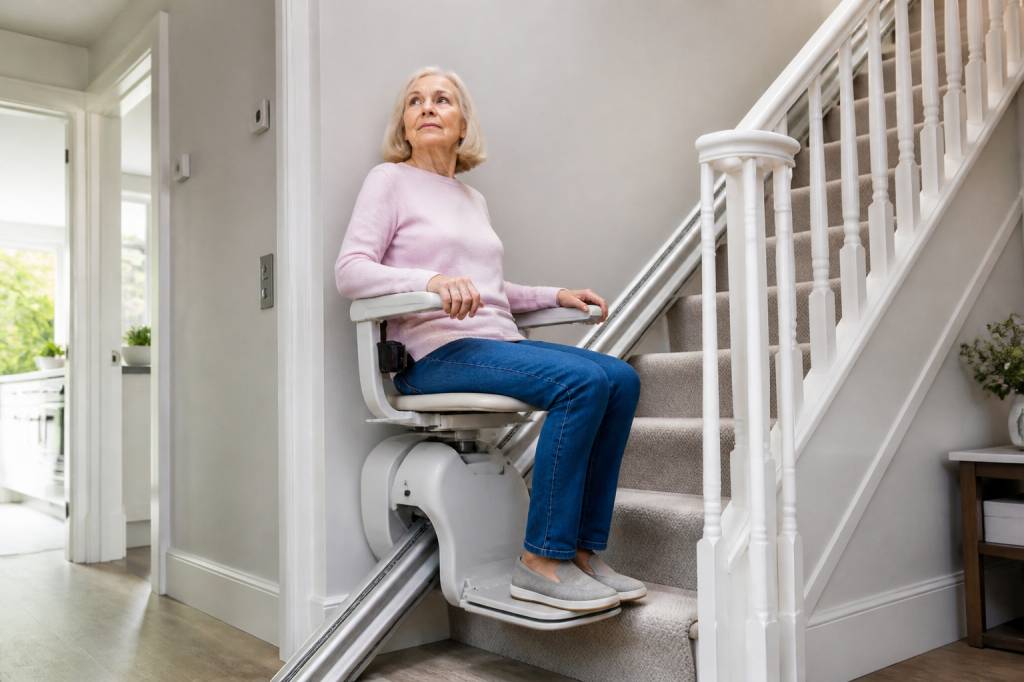
Contrasting stair nosings may help people with reduced vision identify each step. Avoid patterned carpets that disguise the edge of the stairs. If stairs are becoming unsafe, a stairlift may provide a practical solution, but it should be professionally assessed and installed. A poorly fitted lift is no improvement on a difficult staircase.
For people using a walking frame or wheelchair, door widths and thresholds need attention. A small ramp can reduce the trip hazard created by a raised threshold, while lever-style handles are often easier to use than round knobs. Doors should open without blocking the safest route through the home.
Kitchen adaptations for independence
The kitchen contains heat, sharp objects, spills and heavy items, but it is also a place where independence matters. The aim is not to remove every challenge. It is to make regular tasks safer and less tiring.
Store frequently used plates, cups and ingredients at accessible heights. Heavy pans should not be kept on high shelves. A trolley can help move food and drinks between worktops and the dining area, provided it rolls smoothly and does not become a hazard in narrow spaces.
Lever taps or touch-operated controls can be easier for people with arthritis or reduced hand strength. An induction hob may reduce burns because the cooking surface does not remain hot in the same way as traditional hobs, although pans and residual heat still require care. Automatic shut-off devices can provide additional reassurance for someone who may forget that an appliance is switched on.
Good task lighting under wall cabinets can reduce shadows on worktops. Contrast is useful here too: a pale chopping board may be easier to see against a dark surface, while brightly coloured handles can make drawers and appliances easier to identify.
- Use lightweight cookware with secure handles.
- Keep a fire blanket and suitable fire extinguisher accessible.
- Choose appliances with large displays and simple controls.
- Wipe up spills immediately rather than working around them.
- Consider a perching stool for tasks that require prolonged standing.
Assistive technology that earns its place
Technology can support safety, but it should solve a genuine problem rather than add unnecessary complexity. A smart speaker may allow someone to call for help, set reminders or control lights without walking across the room. Voice-controlled bulbs and plugs can be useful when switches are difficult to reach.
Personal alarm systems are another option. Some are worn as pendants or wrist devices and allow the user to contact a monitoring service or family member. Look for clear instructions, reliable coverage and a battery system that is easy to maintain. A device is only helpful if the person remembers to wear it and feels comfortable using it.
Fall detectors, medication reminders and door sensors may be appropriate in some situations. However, they should support personal care rather than replace it. Discuss privacy, consent and data storage before installing monitoring equipment, particularly when it affects another adult’s home.
For people with hearing loss, visual doorbells, flashing smoke alarms and vibrating alerts can make important warnings easier to notice. Those with reduced vision may benefit from talking clocks, large-print labels and high-contrast controls. Accessibility is personal: the same device can be useful to one person and frustrating to another.
Comfort matters as much as safety
A home can be technically accessible and still feel uncomfortable. Hard chairs, cold rooms, poor seating positions and exhausting routines all affect wellbeing. Consider where the person rests during the day and whether the furniture provides proper support.
Chairs should be high enough to make standing manageable, with firm cushions and armrests where appropriate. A comfortable seat in the hallway or near the entrance can make putting on shoes safer. In the living room, leave enough space around chairs for a walking aid without creating a narrow passage.
Temperature control is also important. Older adults and people with some medical conditions may be more sensitive to cold or heat. A programmable thermostat, easy-to-read room thermometer and draught reduction can improve comfort. Avoid portable heaters where they could be knocked over or placed too close to curtains and furniture.
Small organisational changes can reduce fatigue. Place a telephone, water bottle, tissues and medication in a consistent location. Labelling cupboards or using open storage can help someone find what they need without repeatedly bending or searching.
Choosing and maintaining medical equipment
Accessibility equipment should be checked regularly. Rubber tips on walking sticks, shower stools and toilet frames can wear down. Batteries in alarms and sensors need testing. Grab rails may loosen over time, particularly in damp rooms.
Buy from reputable suppliers and check weight limits, dimensions and cleaning instructions. Avoid modifying equipment unless the manufacturer permits it. A product that fits one bathroom may be too wide for another, and a frame that looks sturdy may not be suitable for the user’s height or weight.
Keep instructions somewhere easy to find and make sure everyone involved knows how the equipment works. If several family members provide care, consistent use is important. One person should not leave a shower chair folded away while another expects it to be ready, and a walking aid should not be moved without good reason.
Plan for changing needs
Accessibility is not a one-time project. A person’s needs may change after an illness, injury or gradual loss of strength. Review the home whenever daily tasks become slower, more tiring or less confident.
Start with the adjustment that offers the greatest benefit. This might be a bathroom rail, better stair lighting or a clearer route to the front door. Not every improvement requires a large budget. Moving furniture, replacing slippery rugs and changing light bulbs can often be done in an afternoon.
Most importantly, involve the person who will use the adaptations. Ask what feels difficult and what would make life easier. A solution imposed without discussion may sit unused, however sensible it appears. The safest home is one that supports real habits, preserves dignity and allows people to do as much as possible for themselves.
With thoughtful planning, medical accessibility solutions can blend naturally into a home. The result is not a room full of equipment, but a calmer, safer environment where everyday routines require less effort and offer more confidence.